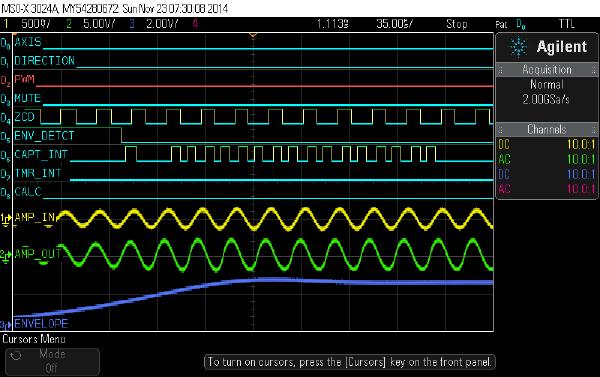
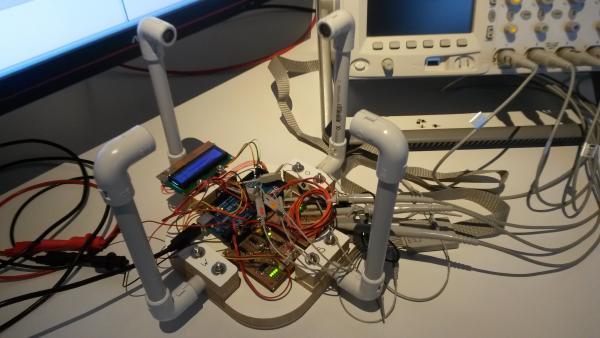
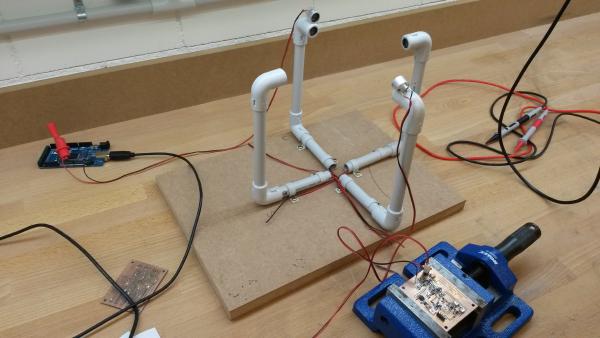
My first wind meter prototype is kind of working. The software will need improvement to make this wind meter into something really useful. But both hardware and software are basically functional and can be built up upon.
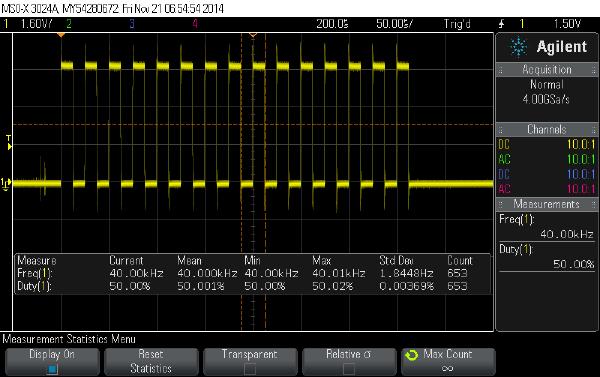
In my last post I talked about how to get the Arduino to output bursts of 40kHz pulses. Today I’ll go through the rest of the software so by the end of this post we’ll have a very rudimentary but working sketch for our ultrasonic wind meter.
Today I’ll tell you how I got started with my software. If you’re new to my blog you might want to click here for an overview over my arduino-based wind meter project: /projects/arduino-ultrasonic-anemometer/
If you’ve read through my previous posts of this series you know that here is an Arduino and two home-made PCBs together with 4 transducers waiting to work together as an ultrasonic wind meter. If you haven’t you may click here for an overview of posts on my anemometer project: /projects/arduino-ultrasonic-anemometer//posts/arduino-ultrasonic-anemometer-part-6-mechanical-design/
In the last post I went through the analog board and showed what I had to do to get it working properly. Today I’ll do the same whith the digital board. Click here for an overview over this series of posts on the anemometer project: /projects/arduino-ultrasonic-anemometer/
In this post I will go through the testing of the analog circuit and what I had to do to make it work properly. Click here for an overview over this series of posts on the anemometer project: /projects/arduino-ultrasonic-anemometer/
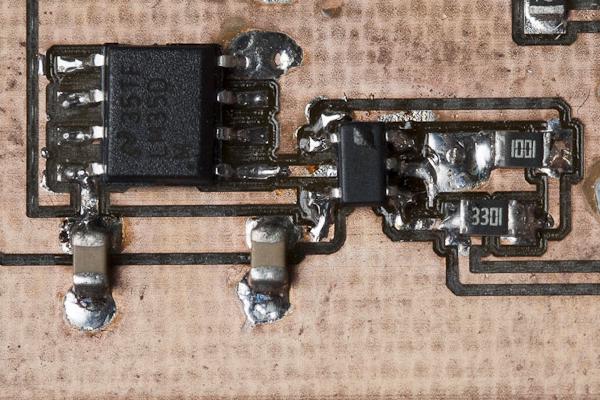
Today I’ll go through the details of the analog cirquit. Click here for an overview over this series of posts on the anemometer project: /projects/arduino-ultrasonic-anemometer/
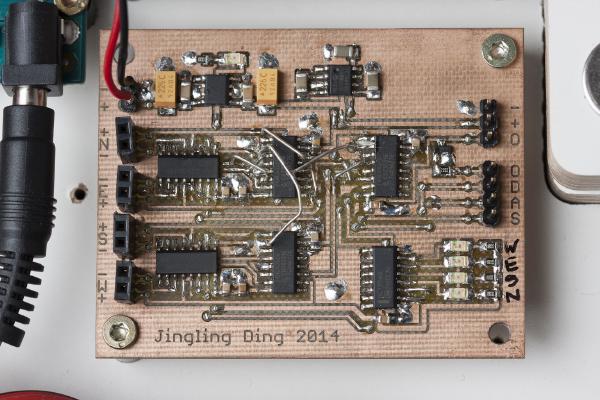
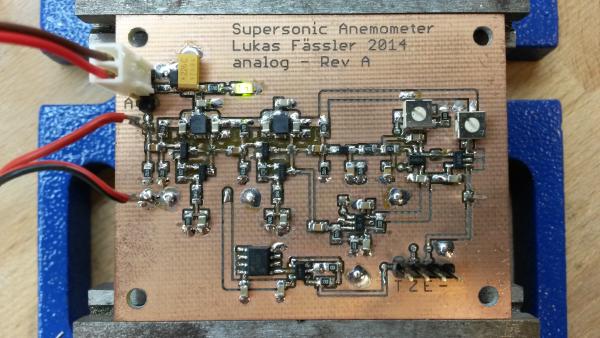
The analog board ready to be connected This is what I would consider the heart of this wind meter. This is where the received signal is amplified and processed so the overall accuracy and reliability of the entire project really depends on it. The functionality of this board can be summarized as follows:
This is the first of a series of posts to follow. I will describe my attempts to build an ultrasonic wind meter (anemometer) based on an Arduino Uno. By the time of writing, I have a working prototype but it will take me a while to catch up in this blog. So this is just the first post - more will follow soon.